
Let Them Explore: Why a Messy Puppy Is a Healthy Puppy


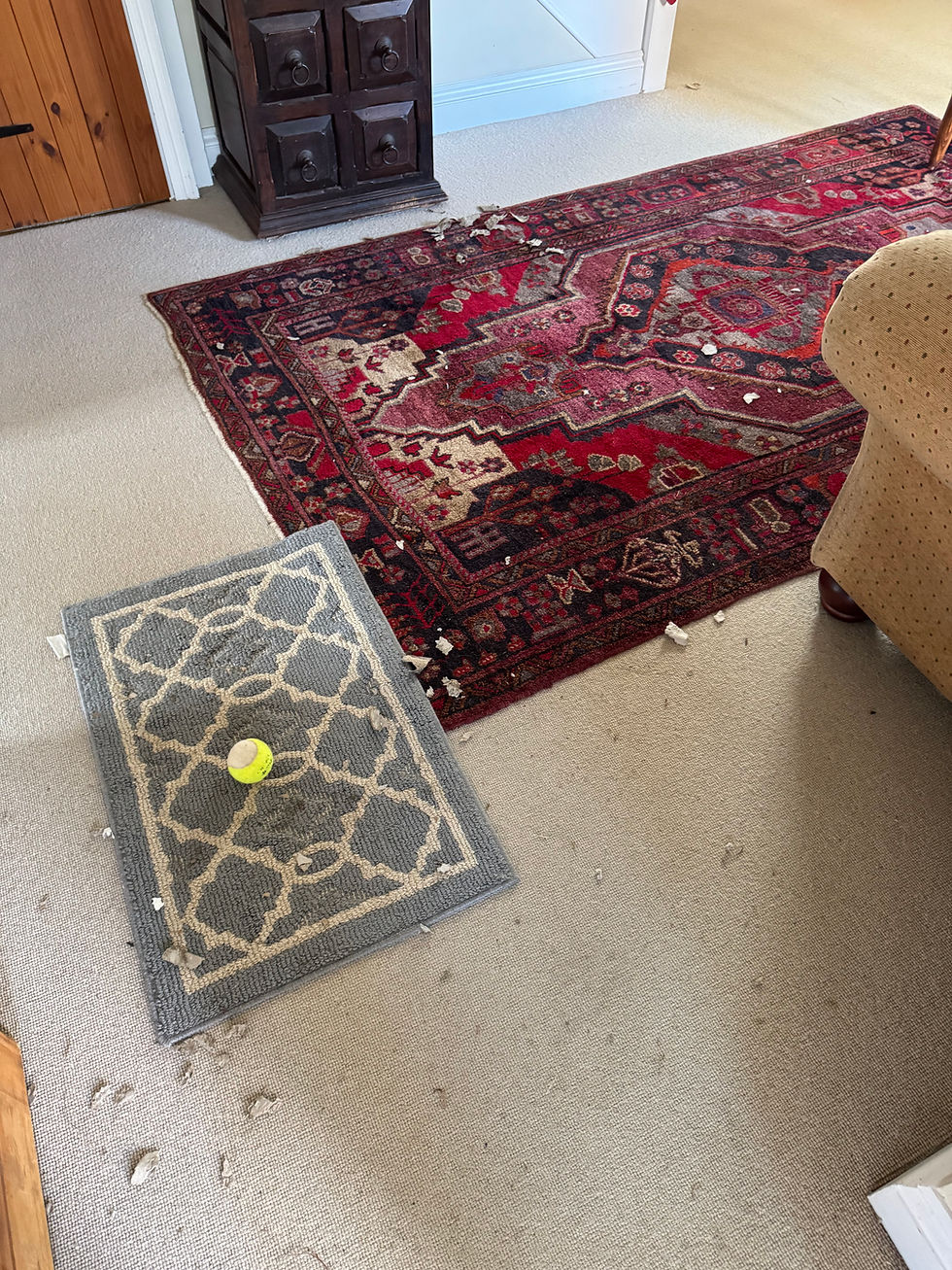
Right now I've got a six-month-old staying with me for training, and my floor is proof of it. There's shredded paper drifting across the living room, a flattened cardboard corner that used to be a box, and if you follow the trail out to the garden, you'll find twigs snapped into pieces, leaves torn to confetti, and a patch of grass that's taken a beating. It looks like chaos. It's actually exactly what should be happening.

The instinct behind the mess
Puppies experience the world through their mouths. Long before they can rely on sight or scent the way adult dogs do, chewing, licking, and tasting are how they gather information — is this soft or hard, does it bend, does it taste like anything, what happens if I bite down. Paper, cardboard, twigs, leaves, and grass are all things a puppy would naturally encounter and investigate in the world, and letting them do it is part of normal development.
It's tempting to swoop in the second you see your puppy mouthing something. But that instinct to intervene immediately, every time, can backfire.
Why constant confiscation backfires
Think about what you're actually teaching a puppy when you snatch things out of its mouth on sight. You're not teaching it "don't chew paper." You're teaching it "hands near my mouth mean I'm about to lose this thing." The result is a dog that learns to gulp first and think later — swallowing fast the moment it senses a hand approaching, just to keep hold of whatever it's got. That's a habit that gets worse, not better, and it's one of the more common ways puppies end up genuinely swallowing something dangerous, because the item goes down whole instead of being chewed and left alone.
There's also a confidence and problem-solving cost. Puppies that are constantly interrupted while investigating things don't get to finish the process of "check it out, chew it, decide it's boring, move on." They get twitchy and possessive instead of curious and settled.

What's actually harmless
To be clear, this isn't a case for leaving puppies unsupervised with anything and everything. But there's a real category of things that fall into the harmless-if-swallowed-in-small-amounts bucket:
Paper — paper, cardboard, and packaging in small quantities pass through without issue
Tissues and toilet paper
Cardboard — same idea; a bit of fibrous mess in the stool is normal
Twigs and small sticks — most dogs chew and drop them rather than eating them outright, and small ingested amounts are generally harmless
Leaves and grass — dogs eat grass and leaves throughout their lives; it's a completely normal behaviour
Dish clothes and tea towels
The goal isn't to hand your puppy a stack of cardboard (although with a puppy that has become possesive I will overwhelm them with offers of more cardboard) and walk away. It's to notice when they're chewing on this kind of low-risk material and let them get on with it, rather than treating every instance as an emergency.
What supervision should actually look like
Letting a puppy explore doesn't mean zero involvement. It means:
Watching without hovering — being present, not looming over every chew session
Redirecting to a chew toy occasionally, calmly, without drama
Recalling for a treat to check they will come away (the safest response if you are ever concerned)
Saving the urgent interventions for things that genuinely matter — anything toxic, sharp, small enough to lodge somewhere, or a choking risk
Trusting that a normal puppy chewing normal debris in a garden is doing exactly what puppies are supposed to do
The mess on my floor today, and the mess waiting in the garden, isn't a training failure. It's a six-month-old doing the job of being a puppy — and the more room I give for that now, the less I or my client will be fighting a grab-and-gulp habit down the line.
The good news is that this is one behaviour they will grow out of!


Comments